The Sunshine State is one of the best places in the United States to have a residential pool. The warm and sunny climate allows for swimming nearly year-round, and the high humidity and temperatures make it a fantastic way to cool off. However, to keep making great memories, you need to maintain the structure and keep the water clean.
Our guide to pool maintenance in Florida will give you the knowledge to keep your pool healthy.
The Basics of Pool Water Chemistry
You’ll need to test these levels to ensure all the chemicals are working in harmony, keeping the water sanitized and the system undamaged:
- Chlorine: Ideally, it should stay between one and three parts per million (ppm).
- pH: Pool water must be kept slightly basic, between 7.2 and 7.8.
- Total alkalinity: Works as a buffer against sudden pH changes, keeping it between 80 and 120 ppm.
- Calcium hardness: Keep this hardness between 200 and 400 ppm to prevent your water from corroding pool surfaces.
- Cyanuric acid: Also known as a stabilizer, it protects chlorine from UV rays, helping it last longer in an ideal range of 30 to 50 ppm.
How to Maintain a Pool in Florida
Maintaining a pool can be as simple as long as you have the necessary tools and some knowledge about pool water chemistry.
Gather the Essential Tools
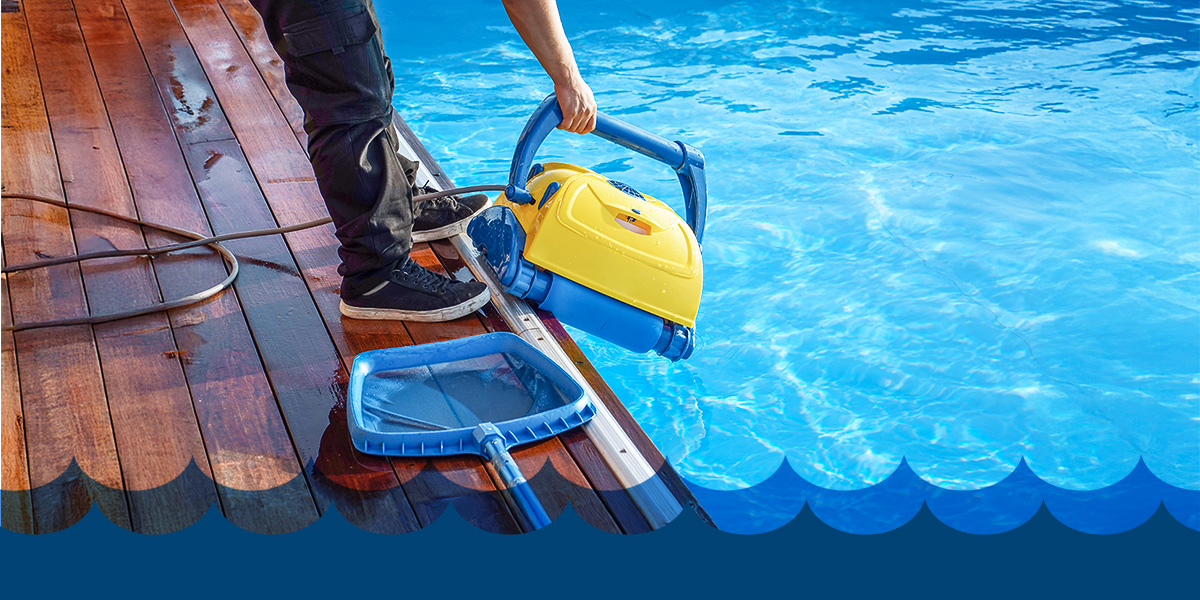
Without tools, there’s not much you can do, so the first maintenance task is to use the following checklist and make sure you have all the necessary equipment, which you can purchase from stores like Home Depot or Leslie’s:
- Skimmer net: Used to remove dirt from the water’s surface
- Brush: To scrub walls, steps and floors of algae buildup
- Pool vacuum: Useful for cleaning dirt and debris from the pool’s floor
- Telescopic pole: A long attachment for convenient reach for brushes, skimmers and vacuums
- Water testing kit: Essential equipment that checks chemical and pH levels
- Chemical dispensers: Floating chlorinators to keep the pool’s chlorine levels at optimum
- Leaf rake: Heavy-duty versions of a skimmer to remove large debris from the surface and bottom of your pool
- Pool filter cleaner: Liquid or powder filter cleaner you can use with a brush to keep your pool system working efficiently
Create a Maintenance Task Schedule
Try organizing your tasks into the following three categories:
- Daily: You should skim leaves and check that the pump and filter are running properly each day.
- Weekly: Do weekly water testing, brushing, vacuuming and emptying debris from skimmers and pump baskets.
- Monthly: You can clean the waterline and test calcium hardness and stabilizer levels monthly.
Test and Balance Your Pool Water
Ensure your chemicals are balanced by:
- Using a test kit
- Adjusting chemicals to fit into ideal ranges.
- Retesting after adjustments and repeating the process if necessary.
How to Prepare Your Pool for a Storm
Florida storms are no joke. Fortunately, pool preparation is simple. You should trim back vegetation to reduce debris, turn off the power and remove any equipment in or by the water. After heavy rain, you should run tests to determine whether you need to balance the levels.
Reach out to Ritzcraft Pools & Pavers for a New Pool Today
Do you feel ready to take the leap and get an installation now that you know pool maintenance is straightforward? If you do, contact us for a free consultation from a reputable, experienced and friendly pool company that stays focused on you throughout the process.